
The Life of Pi
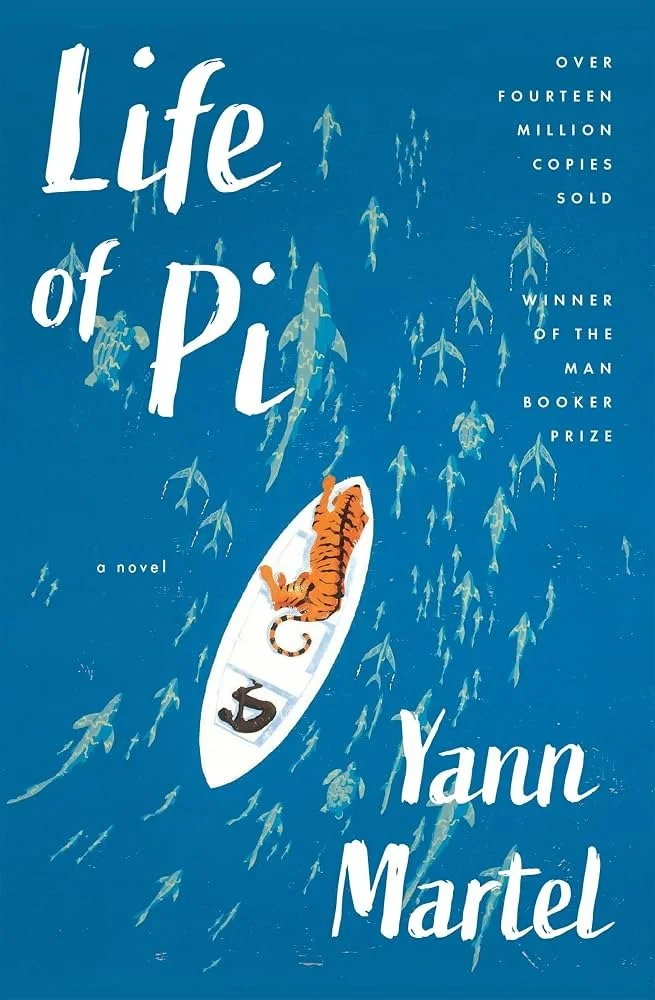
The Life of Pi (novel by Yann Martel; film directed by Ang Lee)
Brief Summary
After a shipwreck in the Pacific Ocean, sixteen-year-old Pi Patel finds himself stranded on a lifeboat with an unlikely companion: a Bengal tiger named Richard Parker. As Pi struggles to survive, he recounts an extraordinary journey filled with danger, wonder, and spiritual reflection. But as the story unfolds, another, far darker version of events emerges, leaving readers and viewers to ask which story is true—and why we tell the stories in the ways that we do.
Why We Recommend It
The Life of Pi offers one of the most compelling contemporary examples of storytelling as a survival technology. Faced with profound trauma, grief, and unimaginable loss, Pi constructs a fantastical, mythic narrative populated by animals and impossible events. This fantastical story lays on top of real events. The story asks a provocative question: Are stories merely escapes from reality, or are they essential tools for metabolizing experiences that cannot be borne directly?
By presenting two versions of the same events—one brutal and factual, the other wondrous and symbolic—the novel and film invite us to consider how fiction can become a vessel for truth, meaning-making, and emotional survival. Rather than opposing fact and fiction, The Life of Pi suggests that the stories we create may be necessary structures for carrying what would otherwise be unbearable.